STEP Five
Monitoring
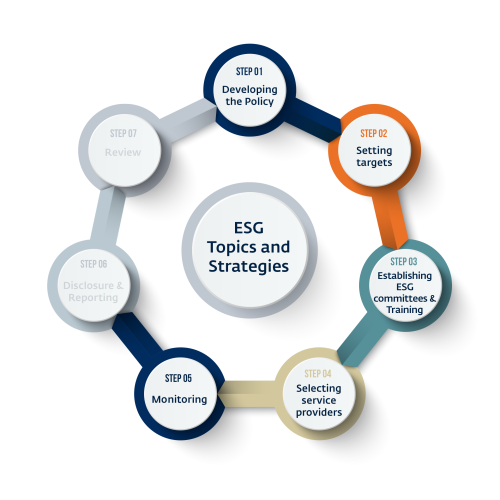
Monitoring is an integral component of the investment process as it is an opportunity to hold managers and service providers accountable and assess the extent to which assets are being managed in line with an owner’s expectations.
Effective monitoring can reveal the outcomes of how a manager or other service provider is implementing the fund’s mandate, IPS, and their broader investment values/principles.
Step 5
The monitoring phase is crucial to assess the delivery of the terms and conditions on which the service provider was appointed, which in turn was informed by the ESG priorities stated in the IPS.
Pension funds should incorporate ESG into monitoring and review processes for all service providers involved in ESG implementation, including investment consultants, legal advisors, and voting service providers.
This section focuses on monitoring of external asset managers, though much of what is presented is applicable to other service providers.
What Does The Regulation Say?
The FSCA Guidance Notice 1 of 2019 paragraph 4.1 (c) states that the investment policy statement should reflect how the fund intends to monitor and evaluate the ongoing sustainability of the asset which it owns and which it is intending to acquire, including the extent to which ESG factors have been considered by the fund, and the potential impact thereof on the assets of the fund.
Monitoring Asset Managers
The monitoring process between asset owner and asset manager should be a formalised dialogue.
Good practice includes:
Organising regular monitoring meetings with asset managers.
ESG implementation should be discussed alongside investment performance during regular monitoring meetings with asset managers. These could be on a quarterly or annual basis. The asset owner should ensure that they are meeting with the key decision-makers, such as investment analysts, the portfolio manager and the ESG team.
The meetings should discuss the portfolio’s investment performance, the level of investment risk in the portfolio, what changes have been made to the investment process and integration practices, and whether the asset manager is actively and successfully integrating ESG factors into investment decisions. Asking for real-life, tangible examples can be valuable in revealing whether a manager’s ESG-related claims are legitimate. Sample questions are available here.
Adequate time and resource should be provided to ensure monitoring is robust and timely. Feedback should be provided to managers.
Asking fund managers to complete questionnaires or regularly report.
The amount, frequency and type of information that asset owners request from asset managers depends on the mandate, the agreed ESG policies and practices and the asset owner’s capacity to review the information.
The asset managers’ investment process and integration techniques should be included in their reporting and their reports should be regularly updated with examples of ESG integration in the current reporting year.
Asset owners should formally define their expectations of external managers with respect to the type, format and frequency of disclosures. This could be set out in the mandate and form part of the appointment process.
While a range of formats and approaches to disclosure are available, an asset owner should encourage a consistent approach across its fund managers to allow for comparability. Standardised disclosure to better assess progress and promote continuous improvement in manager practices . will support the asset owner’s own disclosure processes.
Consider use of methods such as peer analysis, internal scoring systems and portfolio analytic tools.
A pension fund can execute, or ask their investment consultant to execute, a peer analysis of ESG integration performance based on publicly available information such as responsible investment reports or the PRI’s Transparency Reports.